 You have seen the ancient depictions of the pharaoh alone in his chariot with his bow drawn, the horses running in lockstep, as the battle raged around him. And if you are like me, you have wondered if these are historical depictions or artistic license. Few people know the specifics of New Kingdom chariots like Kathy Hansen, who appeared as one of the experts in the NOVA special “Building Pharaoh’s Chariot”. Last Spring Kathy took some time to answer these questions and others for Em Hotep. After some delays (all of them my fault) we are finally able to bring the results to you…
Archive for the ‘New Kingdom’ Category
24
Nov
Warfare and Empire
 Introduction from Em Hotep: lecturer Brian Alm has been kind enough to provide us with a couple of guest articles, this being the first. While I am continuing with the ongoing Western Cemetery series, Mr. Alm and others have been gracious enough to to offer some breaks from the Western Field, and this examination of the role the military played in establishing the Ancient Egyptian empire, particularly during the New Kingdom, is both entertaining and elucidating. Please join me in welcoming Brian with this fresh perspective on that subject we all love- Egyptology. I would also like to welcome Krista Moyls, another familiar face to those who participate in the many active and reputable Egyptology groups on Facebook. Ms. Moyls has contributed photography to support Brian’s work. May this just be the beginning to a long tradition of welcoming new voices to our little tavern on the Internet.
One final note before we start.. I have included hyperlinks from some of the keywords in Em Hotep’s’ repertoire in this article. This is intended to aid the curious in finding more information, and for search engine optimization only. It is not intended to communicate Mr. Alm’s implicit nor explicit approval of where the internal links may take you, and should not be assumed as such. These are strictly for editorial and site maintenance purposes only. Mr. Alm’s words speak elegantly for themselves, the hypertext links are included for site optimization site only! Thanks -K
 Tausret: Forgotten Queen and Pharaoh of Egypt is a collaboration between Richard Wilkinson, who is Regent’ Professor of Egyptian Archaeology and Director of the Egyptian Expedition at the University of Arizona, and some of the most recognizable names in current Egyptology.
Written for a general audience, but with all the details a specialist looks for in a good book, Tausret is one of those books that will teach you about Egyptology while entertaining you with an adventure. But it’s not the sort of swashbuckling adventure you might get with, say Belzoni. It’s more of a detective story, spread out over a lot of detectives.
 The Donation Stele of Pharaoh Ahmose I endowed the office of the God’s Wife of Amun with an estate that consisted of financial income, real estate, her own retinue, and the means to support the entire operation. Called the Per Duat, or, House of the Adoratrice, this estate allowed (at least in theory) the God’s Wife to operate with autonomy from the priesthood and royal house alike.
But in the early part of the New Kingdom the God’s Wife and the Divine Adoratrice were two separate offices within the temple hierarchy at Karnak, which can cause some confusion when exploring the history of these unique institutions. This article will endeavor to disentangle this relationship as we seek to understand what these two offices were and how they came to be merged into a single position, or at least a single career track.
Note: At the end of the last article in this series, The God’s Wives of Amun – Royal Women and Power Politics in the Eighteenth Dynasty, I said that this article would also cover the details of the Donation Stele and exactly what was endowed to the House of the Adoratrice. After some revision it became clear that these were two separate articles. The properties of the House of the Adoratrice will be explored in Part 2: The Demesne of the God’s Wife. This present article will focus on the parallel development of the God’s Wife and the Divine Adoratrice, as well as the House of the Adoratrice as an institution.
 During the Middle Kingdom Period, having a daughter appointed as a God’s Wife in your local temple meant that you were a member of the upper crust of Egyptian society. But at the dawn of the New Kingdom, Pharaoh Ahmose I drafted a legal contract that made the God’s Wife of Amun arguably the second most powerful person in the kingdom. Before all was said and done, one God’s Wife would use the office to become the most powerful person in the kingdom.
With Amun now the King of the Gods, his earthly consort came into her own wealth and authority in a way that would ultimately shatter the glass ceiling of Egyptian politics, at least for a while…
 The story of Amun’s rise to supremacy over the Egyptian pantheon is inseparable from the story of how Thebes rose from an insignificant speck on the map to the spiritual center of the Egyptian universe.
This account of the ascent of Thebes and the god Amun sets the background for a series that will investigate an order of female pontiffs called the God’s Wives of Amun and how these tributaries converge into the ethos, or pathos, of the Heretic King, Akhenaten.
 And now for something completely different! Terry Jones of Monty Python fame teams up with Egyptologist Dr. Joann Fletcher to give us a look at everyday life in ancient Egypt by comparing it to everyday life in modern Egypt.
Food and fun, work and play, you will be surprised by how much remains the same. Summary, analysis, and some really cool video clips wait inside!
 Was King Tut a warrior king or “one sick kid”? Even as the Family of Tutankhamun Project was publishing its findings in the Journal of the American Medical Association that the Boy King was a frail young man who needed a cane to walk, Egyptologist W. Raymond Johnson was publishing his evidence that Tut was an active young man who rode chariots into battle.
So which is the true Tut? What if both versions are accurate? Could this perfect storm of physical challenges and adventurous behavior have led Tutankhamun to a heroic but early grave?
23
Mar
The Mummies Gallery
 Meet the mummies of the Family of Tutankhamun Project! If you are looking for a mummy-by-mummy summary of the recent JAMA article, then you are in luck!
In The Mummies Gallery we will take a look at each of the mummies in both the study and control groups and pull together the familial and pathological data for easy referencing.
 Who built the Great Sphinx? Why did they build it? How did they build it? These questions and more are addressed in Riddles of the Sphinx, by the PBS series NOVA.
Featuring Mark Lehner, Zahi Hawass, Rick Brown, Gunter Dreyer, Richard Redding, Rainer Stadelman, and Fathi Mohamed.
 Was King Tut murdered? Did Akhenaten have both a male and female physiology? Did incest and inbreeding lead the Eighteenth Dynasty down a genetic dead end? Last month the Family of Tutankhamun Project attempted to answer these questions—and more—with the publication of a two-year forensic study of sixteen mummies of the Eighteenth Dynasty.
This article is the first of several in which we will attempt to put the research into layperson’s terms. First we will take a look at the what, who, where, why and how of the study itself.
Plus: Catching Up Em Hotep!
 All the world is abuzz with the long-awaited release of the current genetic study of the Eighteenth Dynasty, particularly as it relates to the goose that continues to lay the golden eggs—King Tut.
Your humble scribe is still mulling over the subject before attempting his own contribution, but in the meanwhile, here are a few excellent pieces from some of the most excellent writers in the Egyptology blogosphere. In the spirit of parsimony, I have narrowed my selection down to the three which I found to be the most unique in their approach and thought provoking in their implications. Enjoy!
 King Tut is known as the Boy King for two reasons. The first is the young age at which he assumed the throne—around eight or nine. The second is that he died at around nineteen, so he never really reached adulthood. Why he died so young is a question that has been with us since his tomb was discovered by Howard Carter in 1922.
In 2005 a team of top radiologists conducted a series of CT scans on Tutankhamun’s mummy, and when the results were announced the following year at the annual meeting of the Radiological Society of North America, the results were not 100% conclusive. Most of the team felt they had settled the question of what had caused Tut’s early death, but there were some holdouts.
So when Zahi Hawass announced last August that he was on the verge of announcing the exact cause of Tut’s death, Em Hotep! took notice. So does a new article and video on Dr. Hawass’ website finally put the question to rest?
 Edfu is most often associated with the Temple of Horus built there during the Ptolemaic Period, but the Tell Edfu Project, directed by the Oriental Institute’s Dr. Nadine Moeller, is literally uncovering a much older story. Ancient Edfu was a persistent city that took a two-fisted approach to adversity and not only survived the first two Intermediate Periods, but flourished.
In Edfu Part One: Ancient Djeba we will look at the history of this ancient mid-sized town that shattered the myth of Egypt being a “civilization without cities.”
 Tutankhamun’s tomb lasted undisturbed for thousands of years, but after mere decades of constant visitors the most famous burial site in the world is on the endangered list.
It would seem we have found the infamous Curse of King Tut, and it is us…
Featured Series










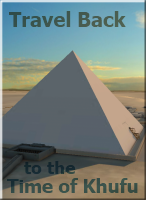
Khufu Reborn Interactive

Great Sphinx
Egyptology Links
Special Project Clearinghouse


Categories
- Announcements (5)
- Egypt in the News (39)
- Locations (65)
- Lower Egypt (57)
- Avaris (1)
- Cairo (5)
- Memphis (1)
- Saqqara (8)
- The Giza Plateau (44)
- Upper Egypt (11)
- Abu Simbel (1)
- Aswan (1)
- Edfu (1)
- Luxor (1)
- Thebes (4)
- Valley of the Kings (6)
- Lower Egypt (57)
- Periods (70)
- Pre-Dynastic (3)
- Early Dynastic (1)
- Old Kingdom (47)
- 1st Intermediate (2)
- Middle Kingdom (4)
- 2nd Intermediate (3)
- New Kingdom (16)
- 3rd Intermediate (3)
- Late Period (4)
- Roman Period (1)
- Byzantine Period (1)
- Islamic Period (4)
- Modern Egypt (6)
- Structures (60)
- Mummies (15)
- Photo Essays (3)
- Vita Shemsi (5)
- Video Reviews (2)
- Uncategorized (2)
- Book Review (1)
- Em Hotep Digest (13)
- Exhibitions (2)
- Giza 3D (1)
- God's Wives of Amun (4)
- Military History (1)
- Queens (2)
Archives
- October 2018
- January 2018
- November 2017
- October 2017
- September 2017
- August 2017
- July 2017
- June 2017
- November 2015
- April 2014
- October 2013
- July 2013
- June 2013
- May 2013
- April 2013
- March 2013
- February 2013
- January 2013
- December 2012
- October 2012
- September 2012
- March 2012
- January 2012
- December 2011
- October 2011
- July 2011
- June 2011
- May 2011
- April 2011
- January 2011
- December 2010
- August 2010
- July 2010
- May 2010
- April 2010
- March 2010
- February 2010
- January 2010
- December 2009
- November 2009
- October 2009
- September 2009
- August 2009
- July 2009
- June 2009
Exclusive!








Giza 3D Interactive

Em Hotep on Facebook

Who's Online
- 0 Known Egyptophiless
- 9 Guest Egyptophiles
Dynasties
- Answers About the Great Sphinx
- Egyptology Internet Links
- Dynasties
- Predynastic
- First Dynasty
- Second Dynasty
- Third Dynasty
- Fourth Dynasty
- Fifth Dynasty
- Sixth Dynasty
- Seventh and Eighth Dynasties
- Ninth and Tenth Dynasties
- Eleventh Dynasty
- Twelfth Dynasty
- Thirteenth Dynasty
- Fourteenth Dynasty
- Fifteenth Dynasty
- Sixteenth Dynasty
- Seventeenth Dynasty
- Eighteenth Dynasty
- Nineteenth Dynasty
- Twentieth Dynasty
- Twenty-First Dynasty
- Twenty-Second Dynasty
- Twenty-Third Dynasty
- Twenty-Fourth Dynasty
- Twenty-Fifth Dynasty
- Twenty-Sixth Dynasty
- Twenty-Seventh Dynasty
- Twenty-Eighth Dynasty
- Twenty-Ninth Dynasty
- Thirtieth Dynasty
- Thirty-First Dynasty
- Thirty-Second Dynasty
- Thirty-Third Dynasty
- Djedi Project Media Clearinghouse
- Giza 3D Project Media Clearinghouse
- Media Clearinghouse-Under Construction
- Project Khufu Media Clearinghouse

